Shopping Days
Get 20% off now[0].

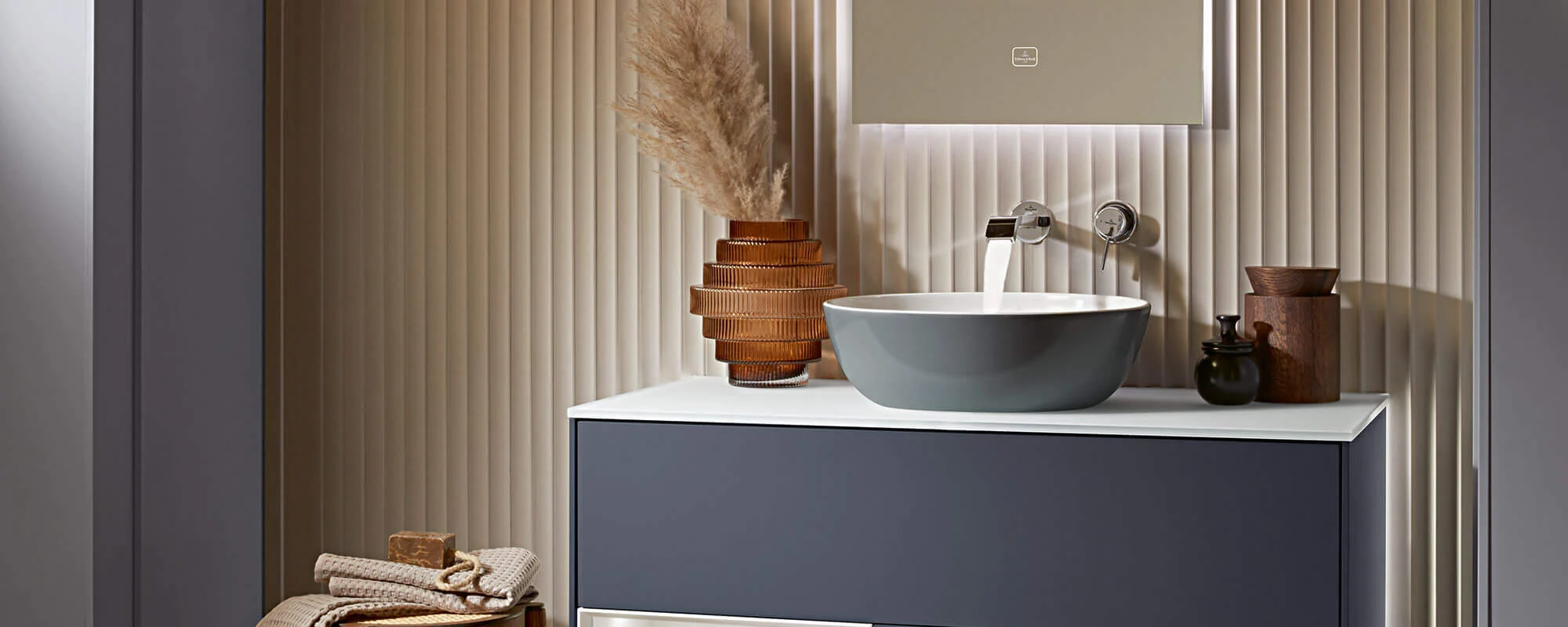
Materials for Washbasins
What materials are available for washbasins?
If you are planning to renovate your bathroom, one of your first questions will be: What materials are actually available for washbasins? And which would work best for me and my bathroom? We present an overview of the most popular washbasin and washstand materials to help you quickly make the right choice.
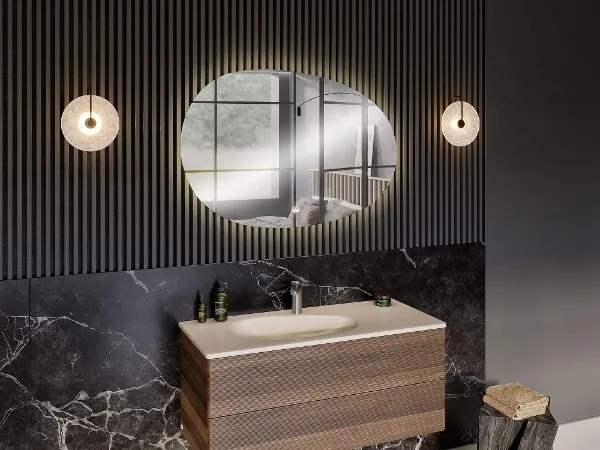
Ceramic washbasins
The ceramic washbasin is a timeless classic. From traditional elegant looks to modern designs: a sanitary ceramic washbasin always conveys a sense of quality. Ceramic consists of materials such as quartz, porcelain clay, silicate minerals and clay.The ceramic mixture is simply moulded, glazed and fired at 1,200 degrees.
Advantages
A ceramic washbasin offers many benefits: it is very durable and, with proper care, will still look like new even many years later. Its smooth surface makes it resistant to scratches and very easy to clean. The material will not be damaged by everyday cleaning products containing acids or by pigments in cosmetic products. Ceramic washbasins come in a wide range of shapes to suit every style. The disadvantage: the washbasin is very heavy and can splinter if a heavy object happens to fall on an edge.
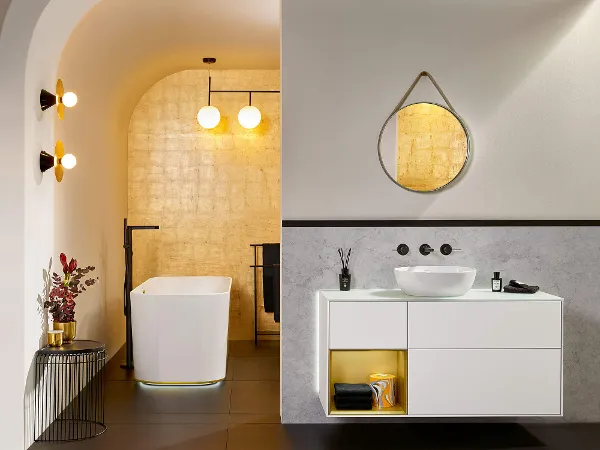
Mineral cast
A mineral cast washbasin consists of minerals which have been ground down into a fine powder and mixed with synthetic resins – i.e. plastics. After being moulded into the appropriate shape, the mixture is left to harden in the air. To create a resistant and easy-care finish, the mineral cast washbasin is varnished with a special gel which then hardens. The plastic content makes mineral cast washbasins easy to shape and they are also lighter than washbasins made entirely from ceramic.
These properties make them ideal as wash bowls for a vanity unit, for example. However, synthetic resins contain chemicals and mineral cast is therefore not a natural product. Mineral cast washbasins are more sensitive to heat. Water must be no hotter than 65 degrees. Mineral cast washbasins are also significantly more susceptible to scratches as, overall, the material is softer than real ceramic. The golden rule for low-priced mineral cast washbasins is: take care with sharp objects.
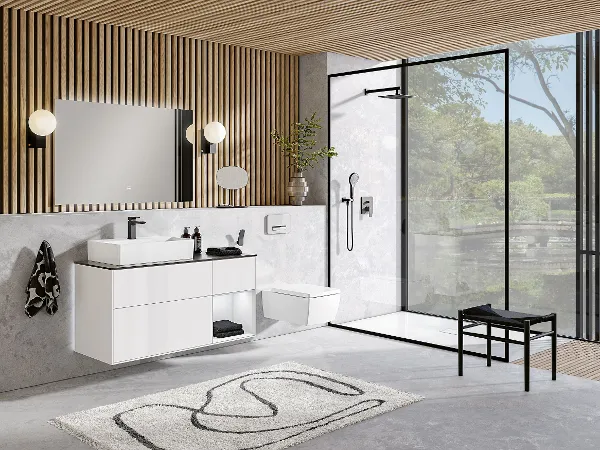
Enamelled steel
You have probably come across enamelled steel in older baths. However, in more recent times, enamelled steel has become increasingly popular for washbasins and washstands. The washbasin is made from steel and then finished with a special glass surface treatment and fired at just under 900 degrees. This makes the surface very hard and resistant to impacts and scratches. The material is also very easy-care.
Enamel washbasins are rare items offered by just a few manufacturers. The steel body is difficult to mould which means there is a limited selection of designs. These washbasins are therefore not particularly versatile and work best in a modern industrial-style bathroom. Enamelled steel can easily be painted to add a splash of colour to your bathroom. The taps for an enamel washbasin are generally installed on the wall.
Washbasin material comparison:
Key benefits and drawbacks
Which material is best suited to your washbasin depends on your individual preferences and requirements. Factors such as weight, shape, appearance, care and the desired material properties all play a role. If you are looking for a particularly lightweight washbasin or a special shape, mineral cast may be an interesting option. Depending on the design, this material offers a high degree of design freedom. When making your choice, however, the material’s respective properties in terms of heat resistance and load-bearing capacity should also be taken into account. If a distinctive appearance is important to you, washbasins made of enamel or steel can be a suitable alternative. Combined with materials such as wood, they can be used to create a variety of bathroom design concepts. Glass or granite also offer special possibilities for an individual bathroom design. Ceramic washbasins are available in numerous shapes, sizes and designs, making them suitable for many different bathrooms. The surface is designed for everyday use and is easy to clean. Depending on the model and installation type, various design options are available. Thanks to the CeramicPlus finish, you can save 90 percent of the time and cleaning products required for cleaning. The reduced use of cleaning products is also beneficial for the environment. The AntiBac surface with silver-ion technology inhibits the growth of germs by more than 99.9 percent, ensuring optimum hygiene.

Get your 10% welcome discount
and make your bathroom even more homely with stylish decorative items from the Villeroy & Boch Online Shop.[0]