Shopping Days
Get 20% off now[0].

The Perfect Material for Toilet Seats
Reading Time: 6 minutes | Article from 19.8.2026
Share
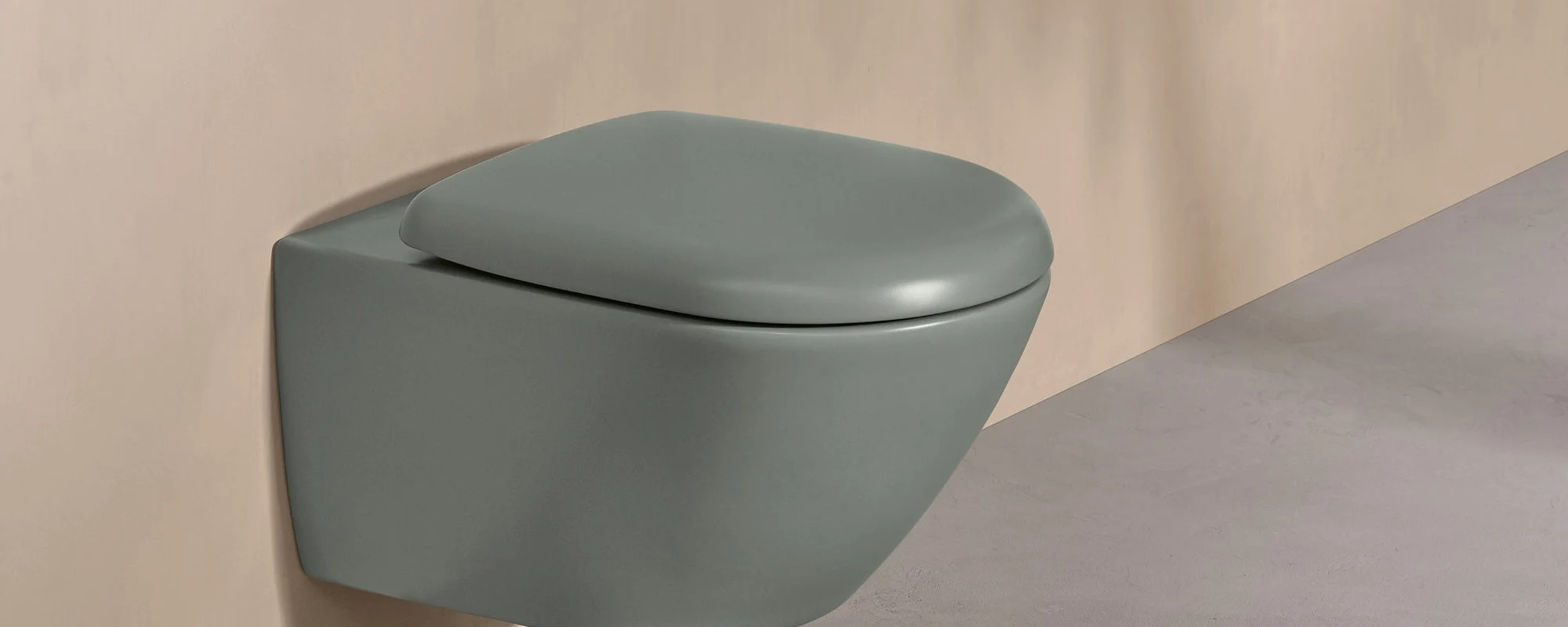
A toilet seat is an absolute essential in any bathroom or toilet. The material and shape will help to determine the level of comfort we experience. In this guide, we present the different materials in detail along with their advantages and drawbacks.
General requirements for any toilet seat
A toilet seat is generally a ring-shaped folding seat with a matching lid. Its main function is to enhance comfort by avoiding direct contact between the skin and the ceramic of the toilet. The toilet seat also allows people of different heights and builds to easily use the toilet.
Hygienic standards
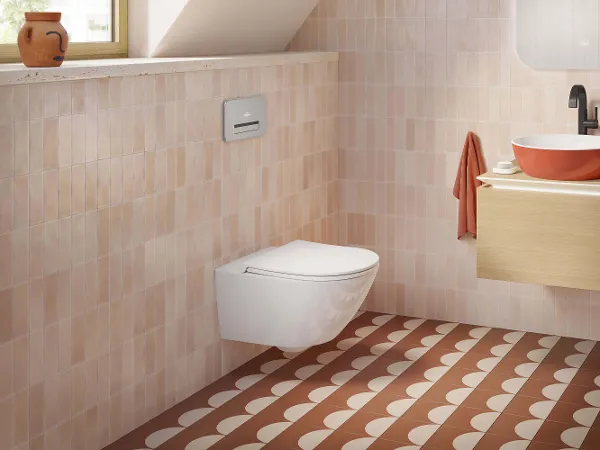
As well as the comfort aspect, hygiene is another important requirement for a toilet seat. The surface needs to be as smooth as possible to provide the least favourable living environment for germs and allow easy cleaning. If you have very high hygiene requirements for your home or want to reduce cleaning time for your toilet, you should consider the attachment system as well as the material of the toilet seat. Modern systems with quick-release hinges, such as the QuickRelease technology, allow you to remove the seat in a single movement and replace it just as quickly. You can then clean the toilet and seat separately and reach even difficult to access areas behind the toilet.
A little guide to toilet seat materials
Below we present five common materials for toilet lids and seats:

Duroplast – antibacterial and very easy to care for
Duroplast materials are plastics that can’t be deformed by heat or other influences once they have hardened. This makes a Duroplast toilet seat very resistant, and it also has a higher quality feel in comparison with a Thermoplast model. The smooth, non-porous surface allows easy cleaning and therefore improved hygiene.
View toilet seats
Wood – natural look and individual design
For anyone looking for a toilet seat with a natural look, wood is an attractive alternative. The characteristic wood grain gives every toilet seat an individual touch. Sealing with clear lacquer brings out the structure particularly well, while the smooth surface is easy to clean. Depending on the model, various types of wood are available to choose from. This makes every wooden toilet seat an individual design element in the bathroom. Wood has special material properties, but requires somewhat more attention when it comes to cleaning and care than other materials. When choosing a wooden toilet seat, factors such as the desired durability, care requirements and the individual needs of the bathroom are just as important as the design.
View toilet seatsOther materials for toilet seats
Different colours and shapes of toilet seats
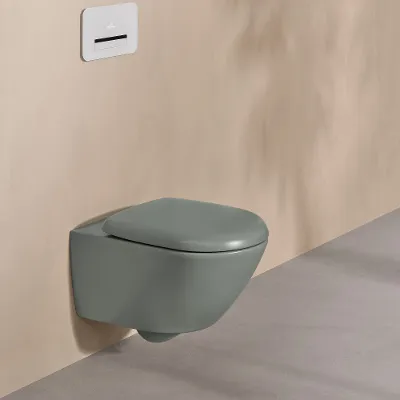
The toilet seat and toilet need to match as closely as possible. To avoid any wobbles when the toilet is used, the best possible fit between seat and ceramic is essential. This applies to colour as well as shape. Classic toilet seats come in shades of white and cream, for example, Light Stone White or muted Star White, to match the ceramic. These shades harmonise with a wide range of styles in the bathroom without being overwhelming. For anyone looking for a brighter or trendier look, a brightly coloured MDF or plastic toilet seat will add a highlight to the bathroom. This look appeals in particular to children and versions with smaller toilet seats can also be found in bright child-friendly colours.



Soft-closing toilet seats
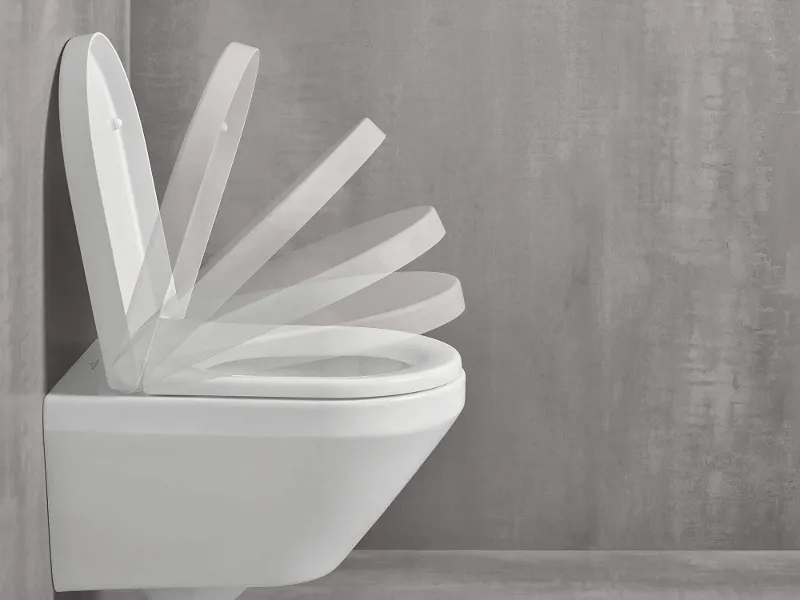
A soft-closing mechanism in the toilet seat stops it slamming shut with a bang. Simply press gently and the lid glides back down, slowly and almost silently. SoftClosing (or Soft Close) toilet seats also protect the material of your toilet fitting. Seats with a soft-closing mechanism are particularly important in households with small children as they avoid trapped fingers when using the toilet.

Get your 10% welcome discount
and make your bathroom even more homely with stylish decorative items from the Villeroy & Boch Online Shop.[0]